In the Fast Lane 
Pull up to the gas pump and check out the prices. Nowadays, it probably won’t take much to convince you that America’s dependence on foreign oil is a problem. Most agree, it’s not great for our national security, and it sure stings the pocketbook.
There are a lot of folks working on developing alternative fuels but one in particular seems to be gaining a lot of momentum.
It’s ethanol, made from corn: American corn. And though not everyone agrees it’s the best solution, a recent visit to Wyoming suggested a growing number of entrepreneurs, automakers, elected officials, farmers and, yes, even race car drivers are jumping on the ethanol bandwagon.
At the Denver Speedway drag strip, just before driver Bill Percival pulls up to the starting line in his sea- foam-green dragster, he fills up his fuel tank with corn! Not literally, of course, but Bill’s dragster and a number of other racers here run on ethanol, the gasoline alternative produced by fermenting corn.
"One of the main advantages of using ethanol is that it burns so much cooler," says Bill. "And in this type of racing, there’s lots of times where we have to go around and around and around and we don’t have time to cool off the engine. So by using ethanol, we can drive and drive and our engines don’t overheat."
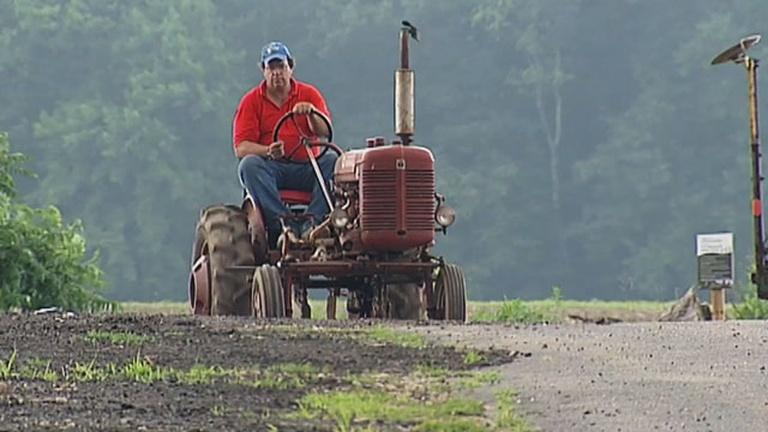
Race cars aren’t the only vehicles using ethanol. Many farmers have used it for years to power farm machinery. And with more stations selling it, many drivers are trying it for the first time.
Dozens of models of flexible fuel vehicles can use E-85, 85% ethanol and 15% gasoline. E-10 has a 10% ethanol / 90% gasoline mix - a formula that’s been approved for use by every major car maker.
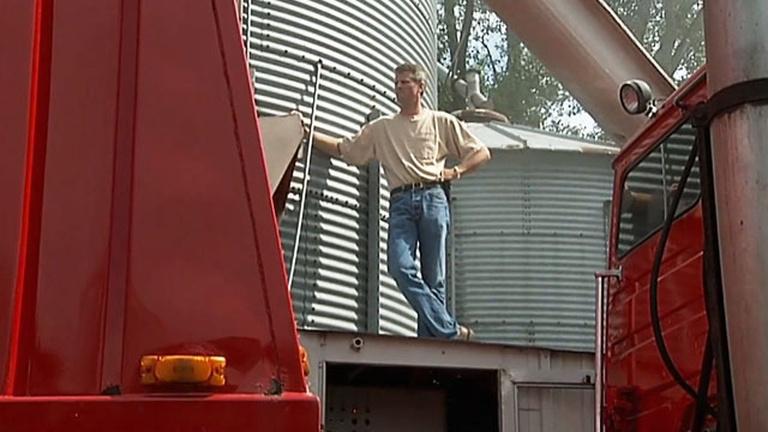
"With the new renewable fuel standards-8 billion gallons of ethanol by 2012-that’s more than doubling what’s being produced today, says Dan Schwartzkopf, who directs production operations at Wyoming Ethanol in Torrington near the Wyoming-Nebraska border. So, that’s a bright future for the corn market."
The plant brings in dried corn, grinds it to a powder, then ferments the mash in a chemical process much like distilling whiskey. When completed, the process creates ethanol: a form of alcohol that burns like gasoline. In 2005, the industry produced almost 4 billion gallons of ethanol - consuming 1.43 million bushels of corn.
"At the 5 million gallons that we produce annually, we use about 1.8 to 2 million bushels annually. About 25% of that is bought right here in Wyoming," says Schwartzkopf.
"I take as much as I can from my rural growers here in Wyoming and the balance of that I take from a radius of about 150 miles, in the Nebraska panhandle and Southern South Dakota."
Ethanol use and production have increased dramatically in the past two years, thanks to new marketing efforts along with state and federal subsidies. Many consider ethanol to be beneficial in reducing carbon monoxide and other auto emissions.
However, it is not a fuel without controversy. Conflicting studies have addressed everything from its energy content to its production costs versus a gallon of gasoline.
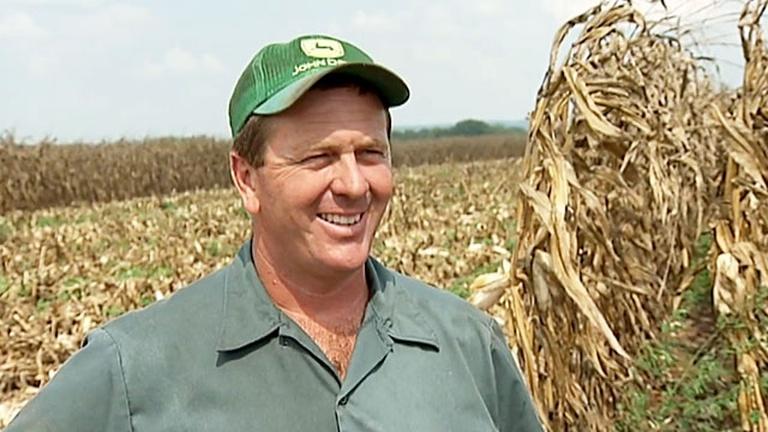
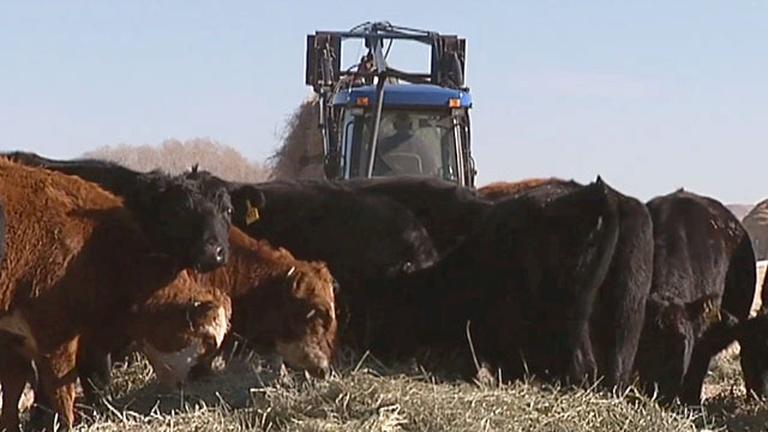
Back on the farm, though, some growers are already supporters. Wyoming cattle rancher Blake Ochsner and his dad, George, use ethanol in their farm equipment. And they use the corn mash left over from ethanol production called "distiller’s grain" as cattle feed.
"We found that it’s extremely palatable," says Blake. "The cattle like the taste and they stay on feed when they’re on it and they do extremely well."
Wyoming Ethanol’s Jon Calahan agrees. "It’s considerably more nutritious. When it leaves here, it’s running about a 32-33% protein where normal corn is running about 8% protein."
Currently ethanol fuel is easier to find in the Midwest and Plains states close to the corn from which it’s made. That may change with new federal mandates on air pollution and energy production. And to up the profile, Wyoming Ethanol is promoting the fuel with a five car drag racing team. The cars compete for national honors at tracks across the country.
Says Schwartzkopf, "They (the fans) leave the racetrack, they go to the gas station and they see ethanol on the pump. They remember the car that ran really good down the racetrack on ethanol and say, ‘Maybe this isn’t so bad, maybe it’ll make my car run better."
For more information:
www.ethanol.org
www.drivingethanol.org
|